Research Interests
Broad directions I am currently pursuing in condensed matter theory.
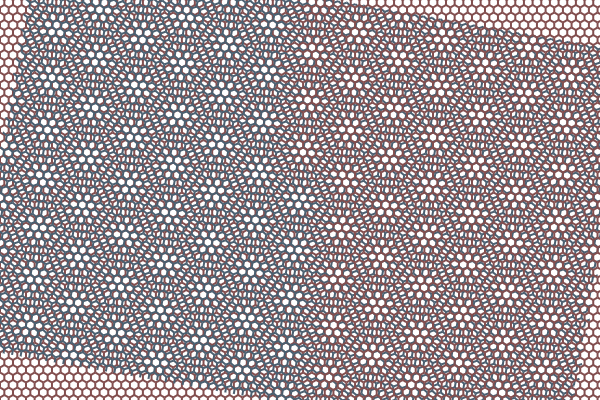
Strongly correlated 2D materials and moiré systems
Graphene multilayers and twisted TMDs
My long-term goal is to use moiré and other 2D platforms as a controllable laboratory for truly exotic quantum phases including topological order and unconventional superconductors, and to understand not only each phase, but the web of phase transitions that connect them.
Moiré systems are highly tunable in a way that is rare in traditional condensed-matter materials. By changing density, displacement field, twist angle, or magnetic field, the same device can realize very different phases: in graphene multilayers and twisted TMDs one can see quantum anomalous Hall (QAH) states, fractional QAH (FQAH) states, and superconductivity in a single device. This tunability makes it possible to build microscopic models that can be quantitatively confronted with experiment, rather than just qualitatively compared.
The first step in organizing this landscape is to understand the “parent” states from which these exotic phases descend. Because these systems carry spin and valley degrees of freedom, the parent phases are often various forms of magnetic or isospin order. Different patterns may or may not break time-reversal symmetry, and therefore carry a net Berry curvature. In rhombohedral graphene and twisted TMDs, we mapped out the first global phase diagrams with realistic models and identified the competition between different orders. QAH then naturally appears in orders that produce Chern bands.
The second step is to ask how far this logic extends beyond moiré superlattices. In pentalayer graphene, we discovered a new anomalous Hall crystal (AHC) phase: a Wigner crystal that nevertheless carries a Hall response. Here interactions spontaneously open a transport gap without relying on a moiré potential. In the presence of disorder this state behaves as a QAH insulator.
Importantly, these 2D materials mark the first examples a QAH state is realized in an isolated Chern band. By fractionally doping these Chern bands, one obtains the long sought fractional QAH states (FQAH). Experiments by Long Ju, Xiaodong Xu and collaborators confirm this picture, and we provided quantitative microscopic calculations that match the observed phases.
The more intriguing descendant phases for me are the superconductors. Many of these 2D systems exhibit superconductivity, but in different parameter windows and with different properties, suggesting potentially different mechanisms. We have proposed two broad mechanisms:
-
Isospin-fluctuation-mediated pairing. In bilayer and trilayer graphene, superconductivity tends to appear near the boundaries between competing magnetic phases, where isospin fluctuations are strongest. We analyzed how strong these fluctuations are and what pairing symmetries they naturally favor.
-
Anyon superconductivity. This is the most exotic mechanism. In twisted TMDs, superconductivity often appears very close to FQAH states and nearby re-entrant integer quantum Hall (RIQH) phases. Using field theory, we showed that superconductivity and RIQH are the natural descendants of a FQAH state, whereas a simple metallic phase is not. Numerical work supports this picture and provides an example of superconductivity induced by purely repulsive interactions.
Taken together, moiré and 2D materials provide a uniquely versatile setting in which one can realize QAH, FQAH, electron crystals, and several distinct routes to superconductivity. This makes it possible not only to study each phase in isolation, but to track continuous transitions between them and to ask which phases are the true “parent” states from which the others emerge.
Fractional quantum Hall effect and non-Abelian anyons
Topological quantum computation and new topological phases of matter
My interest in the fractional quantum Hall effect (FQHE) is strongly driven by experiment. I think of FQHE as a concrete platform where we can design and test microscopic ideas about topological order. Two long-term goals guide most of my work in this area:
- To build a robust platform for topological quantum computation based on non Abelian anyons
- To discover and understand new topological phases of matter that go beyond our standard paradigms
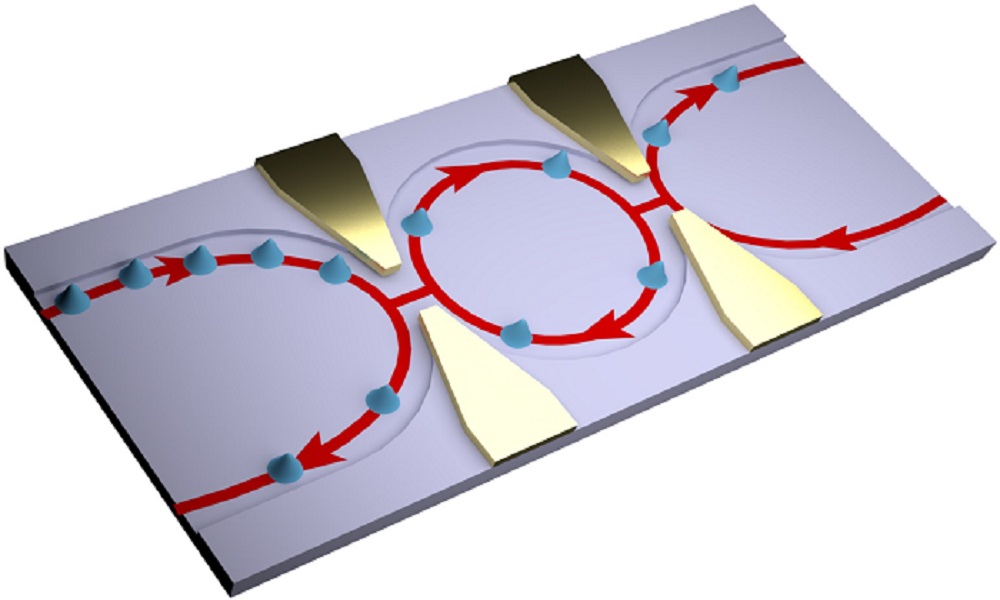
There are many proposals for topological quantum computation based on nanowires, proximitized superconductors and related systems. The platform I find most compelling is non Abelian states in the FQHE. The samples can be extremely clean, the anyons can be manipulated with gates and interferometry, and some non Abelian states are powerful enough in principle to support universal quantum computation.
In bilayer graphene, Pfaffian like states at even-denominator fillings are particularly promising. Together with collaborators, we have outlined a protocol for how such a state could be used for topological quantum computation, from initializing topological degrees of freedom to implementing controlled braiding operations and reading out the result.
Several key steps have already been demonstrated in experiment, including new device architectures and lithography, tunneling and STM probes that access fractional edge structure, interferometry that reveals fractional statistics, and thermodynamic measurements that are sensitive to the entropy of non Abelian anyons.
A second thread in my FQHE work focuses on new topological phases that naturally emerge in graphene based quantum Hall systems. Graphene allows multilayer structures and additional valley degrees of freedom. This opens the door to topological orders that do not appear in single layer GaAs, to unconventional phase transitions between them, and to regimes where topological order coexists with symmetry breaking states.
Within this broader context, we introduced the notion of an anyon superfluid. In the bilayer and trilayer settings we studied, there is no simple boson that condenses in the usual way. Instead, one can think in terms of partons forming their own quantum Hall states, and the resulting low energy theory describes a superfluid that retains an underlying topological order. This revives the old idea of anyon superconductivity in a concrete and controlled setting.
For me, FQHE in graphene and related platforms is therefore both a playground for topological quantum computation and a laboratory for discovering new forms of topological order and their unusual descendants, such as anyon superfluids and daughter states.
Quantum criticality
Topological phase transitions, Chern–Simons–matter theories, and fuzzy-sphere methods
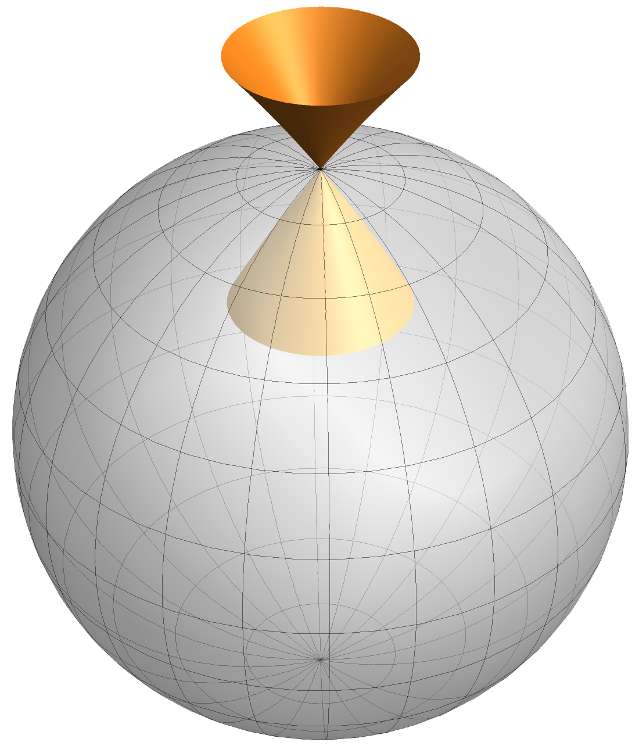
Much of my work on quantum criticality focuses on strongly interacting fixed points in 2+1 dimensions. Conceptually, I am interested in critical theories that go beyond the familiar Wilson–Fisher and Gross–Neveu universality classes, and that are tightly connected to topological phases of matter. Practically, these questions are driven by concrete transitions that can be engineered in quantum Hall systems and related 2D platforms.
One broad theme is the study of new kinds of quantum criticality described by Chern–Simons–matter theories, such as QED and QCD with Chern–Simons terms. These theories turn out to be directly relevant for transitions out of fractional quantum Hall states. Current theoretical understanding of these Chern–Simons–matter fixed points is still rudimentary. We do not yet have a conformal-bootstrap characterization, and it is not even obvious in general whether all of the proposed fixed points truly exist. Our study of a few examples in quantum Hall steups, including the transition between a bosonic Laughlin state and a superfluid, between a fermionic Laughlin state and a superconductor, and between the bilayer 330 and 112 states, prove the existence for these exotic critical points.
A second direction is to develop tools for studying generic 2+1D conformal field theories in a way that goes beyond extracting a few critical exponents. Here fuzzy-sphere and similar constructions have turned out to be very powerful. By formulating the theory on a sphere with an SO(3) symmetry, one can organize states into angular-momentum multiplets and compute not only a few critical exponents but an entire conformal spectrum. We have applied this strategy to several examples, including the Ising and Yang–Lee CFTs and Gross–Neveu–Yukawa–type models, each of which comes with its own technical challenges and characteristic features revealed by our work.
Numerical methods for many-body systems
Tensor networks, neural quantum states, and quantum bootstrap
Many of the projects above rely on large scale numerics, but a separate thread of my work is to develop new numerical methods that can keep up with the questions posed by strongly correlated systems. I am especially interested in projected entangled pair states (PEPS), neural quantum states (NQS), and quantum bootstrap approaches.
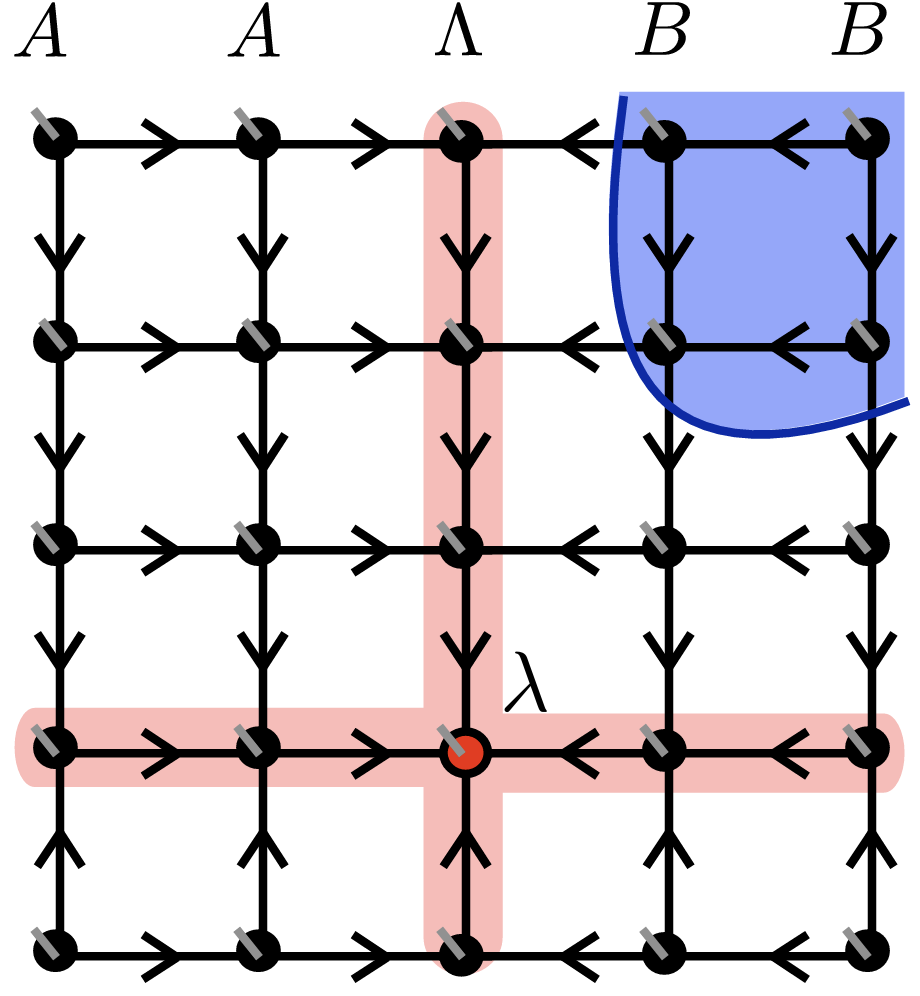
The success story of one dimensional tensor networks is built not only on the representational power of matrix product states, but also on the existence of efficient algorithms for computing operator expectation values. In two dimensions, PEPS in principle have very good representability, but even when a state can be written as a PEPS, computing expectation values is generically exponentially hard. In practice this severely limits which PEPS algorithms are truly usable.
A major step forward was the introduction of isometric PEPS by Michael P. Zaletel and Frank Pollmann. Isometric PEPS form a restricted subclass of PEPS for which expectation values can be evaluated much more efficiently while still capturing a rich set of phases. We have generalized this framework to fermionic systems and used it to simulate time evolution in interacting 2D models. This makes it possible to study dynamical properties and quenches in two dimensional systems that are difficult to access with traditional methods.
For neural quantum states, my focus has been on representability and expressivity. There is a lot of enthusiasm about NQS as a flexible ansatz for ground states and dynamics, but relatively little is known which architectures can represent which many body states efficiently. Recently we have found that a broad family of seemingly powerful NQS architectures in fact cannot efficiently represent even quite simple quantum states, which places important constraints on how they should be used in practice.
Finally, quantum bootstrap is a recently developed set of methods to study many-body ground states and excitations. There are many basic questions that are still open, such as which operators provide the most stringent constraints, how to systematically choose an operator basis, and how to treat systems at or near a critical point. My current work in this area is aimed at understanding these structural questions so that quantum bootstrap can become a more practical tool for studying realistic models.
Anomalies, LSM constraints, and higher central charge
From lattice symmetries to gravitational responses
I am also interested in various kinds of anomalies, especially Lieb–Schultz–Mattis (LSM)–type anomalies and gravitational anomalies. For LSM anomalies, my focus has been on fermionic LSM and on how the anomaly behaves under projections of the Hilbert space. This naturally leads to questions about how anomalies flow under renormalization: how the UV anomaly defined on a microscopic lattice system is related to the IR anomaly of a continuum field theory description, and how much of the UV constraint survives in low energy effective models.
On the gravitational side, I study a particular class of anomalies characterized by higher central charge or higher Hall conductance. These provide, together with the usual chiral anomaly, a complete set of gravitational anomalies. Recently we introduced a wave function diagnostic for such anomalies based on partial rotations of the many body state. This construction offers a controlled way to connect a bulk TQFT perspective to an edge CFT perspective. It becomes clear recently that these gravitational anomalies are not rare or esoteric objects: they appear naturally in many settings, including lattice Chern–Simons theories and sequential quantum circuits.